


What Makes Mohs Surgery Different From Traditional Excision?
June 2025

Dr Koh Hong Yi
Senior Consultant Dermatologist
 MBBS (Singapore), MRCP (UK), MMed (Internal Medicine), FAMS (Dermatology)
When it comes to treating skin cancer, precision matters. Among the various surgical options available, Mohs micrographic surgery stands out for its high cure rates and tissue-sparing technique. But how exactly does it differ from traditional excision? With skin cancer, there isn’t always a one-size-fits-all approach. Your treatment depends on a range of factors, including the type of cancer, location, size, and whether it’s a first occurrence or a recurrence.
For patients seeking expert care at a skin cancer clinic or from a skin cancer surgeon, understanding these differences is key to making informed decisions. In this article, we’ll explore what sets Mohs surgery apart, especially in the context of care provided by a Mohs micrographic surgeon in Singapore.
Understanding the Basics
What is Traditional Excision?
Traditional surgical excision (also known as wide local excision) involves removing the visible skin cancer along with a predetermined margin of surrounding healthy tissue. The excised tissue is then sent to a laboratory for histopathological analysis, which may take several days. If cancer cells are found at the margins, a second surgery may be required.
Of note, during conventional histopathological analysis, only a small sample (usually between 3 – 15%) of the total surgical margin is tested for the presence of cancer cells. Hence, when the laboratory report says the margins are clear of cancer cells, they are technically saying the sample of the margins tested is clear of cancer cells. An analogy is like the customs officer at a seaport checking containers coming into the country for contraband. The volume of containers is too large to check all of them, so only a sample of containers is inspected for the presence of contraband.
What is Mohs Micrographic Surgery?
Mohs micrographic surgery is a specialised procedure used to treat skin cancer by removing it one layer at a time, with each layer examined under a microscope immediately during the process. This allows the Mohs micrographic surgeon to precisely track and remove all cancerous cells while preserving as much healthy tissue as possible. Some studies estimate that Mohs surgery reduces the amount of healthy tissue removed by 30%. This is especially significant if the skin cancer occurs on the face or around important structures like the eyes or nose.
Furthermore, Mohs surgery requires real-time examination of 100% of the surgical margin (compared to only 3 – 15% in traditional excision). Hence, a tumour treated by Mohs surgery is more likely to be completely removed and less likely to recur.
These features make Mohs micrographic surgery the preferred treatment method for high-risk skin cancers, or skin cancers at cosmetically sensitive areas such as the face, ears, or hands. A Mohs micrographic surgeon is specially trained in both surgery and pathology. This dual expertise allows them to remove cancerous tissue with extreme precision while preserving as much healthy tissue as possible. This method significantly reduces the chance of leaving behind microscopic cancer cells, helping to prevent future skin cancer recurrence.
Key Differences Between Mohs Surgery and Traditional Excision
| Feature | Traditional Excision | Mohs Micrographic Surgery |
|---|---|---|
| Tissue Removal | Fixed margin (usually 4 – 6 mm) | Layer-by-layer with microscopic margin control |
| Margin Assessment | Off-site, post-operative | On-site, real-time |
| Cure Rate | ~90 – 92% for primary BCC/SCC | Up to 99% for primary BCC/SCC |
| Tissue Conservation | Less precise | Maximally tissue-sparing |
| Number of Visits | May require multiple surgeries | Usually completed in one visit |
| Best For | Low-risk or small lesions | High-risk, recurrent, or cosmetically sensitive areas |
Tissue Removal
Margin Assessment
Cure Rate
Tissue Conservation
Number of Visits
Best For
Tissue Removal
Margin Assessment
Cure Rate
Tissue Conservation
Number of Visits
Best For
Why Choose Mohs Micrographic Surgery in Singapore?
Singapore has several clinics that provide Mohs surgery and other surgical approaches for the management of certain skin cancers. Here’s why patients are increasingly opting for this technique:
Highest Cure Rates
Mohs surgery offers the highest cure rates for common skin cancers like basal cell carcinoma (BCC) and squamous cell carcinoma (SCC). This is especially important for recurrent or aggressive tumours.
Real-Time Margin Control
Unlike traditional excision, where tissue is sent to a lab and results take days, Mohs surgery allows the surgeon to examine 100% of the surgical margins during the procedure. This ensures complete cancer removal before the wound is closed.
Tissue Preservation
Because only cancerous tissue is removed, Mohs surgery preserves the maximum amount of healthy skin. This is particularly beneficial for cancers on the face, ears, or other cosmetically sensitive areas.
Single-Day Procedure
Mohs surgery is typically performed in a single outpatient visit at a skin clinic in Singapore. Patients can go home the same day, with minimal downtime.
Performed by Specialists
A Mohs micrographic surgeon in Singapore undergoes rigorous training in both dermatologic surgery and pathology. This dual expertise ensures accurate diagnosis and precise excision.
For these reasons, Mohs surgery is considered the gold-standard treatment for basal cell and squamous cell cancers and is recommended by renowned institutions worldwide, such as the American Society for Dermatologic Surgery, American Academy of Dermatology, and British Association of Dermatologists.
Who is a Candidate for Mohs Surgery?
Not all skin cancers require Mohs micrographic surgery. It is generally recommended for:
- Skin cancers in cosmetically or functionally critical areas (e.g., nose, eyelids, lips, ears, fingers).
- Recurrent tumours or those with aggressive histologic subtypes.
- Tumours with ill-defined borders.
- Skin cancers in immunocompromised patients.
A consultation can help determine the most appropriate treatment based on the tumour type, location, and individual patient factors.
What to Expect at a Skin Cancer Clinic in Singapore
When visiting a skin cancer clinic in Singapore for Mohs surgery, patients can expect:
1. Pre-Operative Consultation
Your diagnosis and medical history will be reviewed, and the procedure will be explained in detail.
2. Surgical Procedure
The Mohs micrographic surgeon removes the visible tumour and examines the tissue under a microscope. If cancer cells remain, additional layers are removed until clear margins are achieved.
3. Reconstruction
Once the cancer is fully removed, the wound is repaired. This may involve simple sutures or more complex reconstruction, depending on the size and location.
4. Follow-Up Care
Patients are monitored for healing and recurrence, with regular skin checks recommended.
Choosing the Right Mohs Micrographic Surgeon in Singapore
When selecting a skin cancer surgeon, consider the following
- Ministry of Health certification in dermatology and fellowship training in Mohs surgery.
- Experience with complex or cosmetically sensitive cases.
- Access to on-site pathology for real-time analysis.
- Patient-centered care with clear communication and follow-up.
A reputable skin clinic in Singapore will prioritise both oncologic safety and aesthetic outcomes, ensuring peace of mind for patients.
Conclusion
Mohs micrographic surgery represents the gold standard for treating certain types of skin cancer, offering unparalleled precision, high cure rates, and excellent cosmetic outcomes. While traditional excision remains effective for many low-risk cases, Mohs surgery is the preferred choice for complex or high-risk tumours.
If you’ve been diagnosed with skin cancer or require further evaluation, appropriate medical assessment can help determine the next steps in your care. At TSN Dermatology Skin Specialist Clinic, available services include skin cancer screening, traditional excision, and Mohs micrographic surgery. Booking a consultation can help you better understand the treatment options that may be suitable for your condition.
References
- American college of Mohs Surgery. American College of Mohs Surgery (ACMS). (n.d.). https://www.mohscollege.org/for-patients/about-mohs-surgery/overview-of-mohs-micrographic-surgery
- Bichakjian, C. K., et al. (2018). Guidelines of care for the management of basal cell carcinoma. Journal of the American Academy of Dermatology, 78(3), 540–559. https://doi.org/10.1016/j.jaad.2017.10.006
- Schmults, C. D., Blitzblau, R., Aasi, S. Z., Alam, M., Amini, A., Bibee, K., Bordeaux, J., Chen, P. L., Contreras, C. M., DiMaio, D., Donigan, J. M., Farma, J. M., Ghosh, K., Harms, K., Ho, A. L., Lukens, J. N., Mark, L., Medina, T., Nehal, K. S., Nghiem, P., … Espinosa, S. (2023). Basal Cell Skin Cancer, Version 2.2024, NCCN Clinical Practice Guidelines in Oncology. Journal of the National Comprehensive Cancer Network : JNCCN, 21(11), 1181–1203. https://doi.org/10.6004/jnccn.2023.0056
- What is mohs surgery?. American Academy of Dermatology. (n.d.). https://www.aad.org/public/diseases/skin-cancer/types/common/melanoma/mohs-surgery
Meet Our Doctor
MBBS, MRCP (UK), M.Med (Internal Medicine), FAMS (Dermatology)
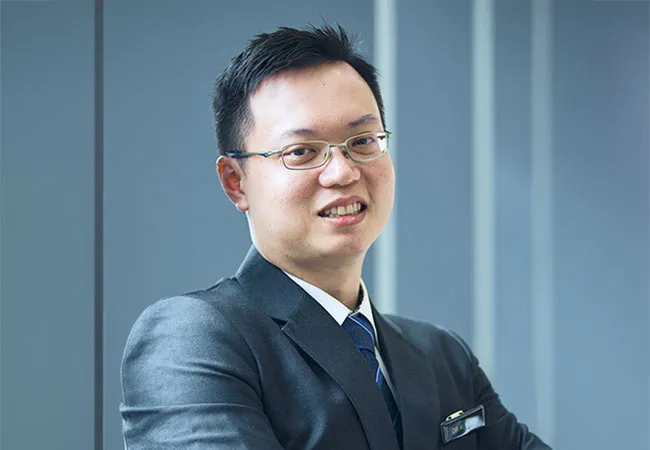
Dr Koh Hong Yi has over 20 years of clinical experience spanning Singapore and the United Kingdom. He previously served at Singapore General Hospital and was involved in medical teaching at Duke-NUS Medical School. He believes in a personalised and thoughtful approach to care, taking the time to understand each patient’s concerns and recommend treatment tailored to their needs.
More About Dr Koh