
 +65 64766821
Get In Touch
+65 64766821Book An Appointment

Sebaceous Cyst vs Lipoma: How Can You Tell the Difference?
August 2026

Dr Koh Hong Yi
Senior Consultant Dermatologist
 MBBS (Singapore), MRCP (UK), MMed (Internal Medicine), FAMS (Dermatology)
Cysts and lipomas are among the most common types of lumps that develop on or beneath the skin. Both are generally benign, and at first glance, the two can be difficult to distinguish based on appearance alone. However, cysts and lipomas develop from different tissues and tend to differ in how they look, feel and behave over time.
Knowing these differences can provide useful context, although a medical assessment may still be needed to determine the nature of a recently developed lump.
What Are Sebaceous Cysts and Lipomas?
Sebaceous cysts and lipomas both develop from different tissues.
A sebaceous cyst is a closed sac beneath the skin that contains fluid or semi-solid material. The term is commonly used to describe epidermoid cysts, which contain keratin, a protein naturally found in the skin, hair and nails.
A lipoma, on the other hand, is a benign growth of fat cells that forms beneath the skin. It develops when fatty tissue grows into a soft, localised mass surrounded by a thin capsule.
Key Differences Between Sebaceous Cysts and Lipomas
Sebaceous cysts and lipomas can differ in their appearance, texture, mobility, symptoms and where they commonly develop.
Appearance
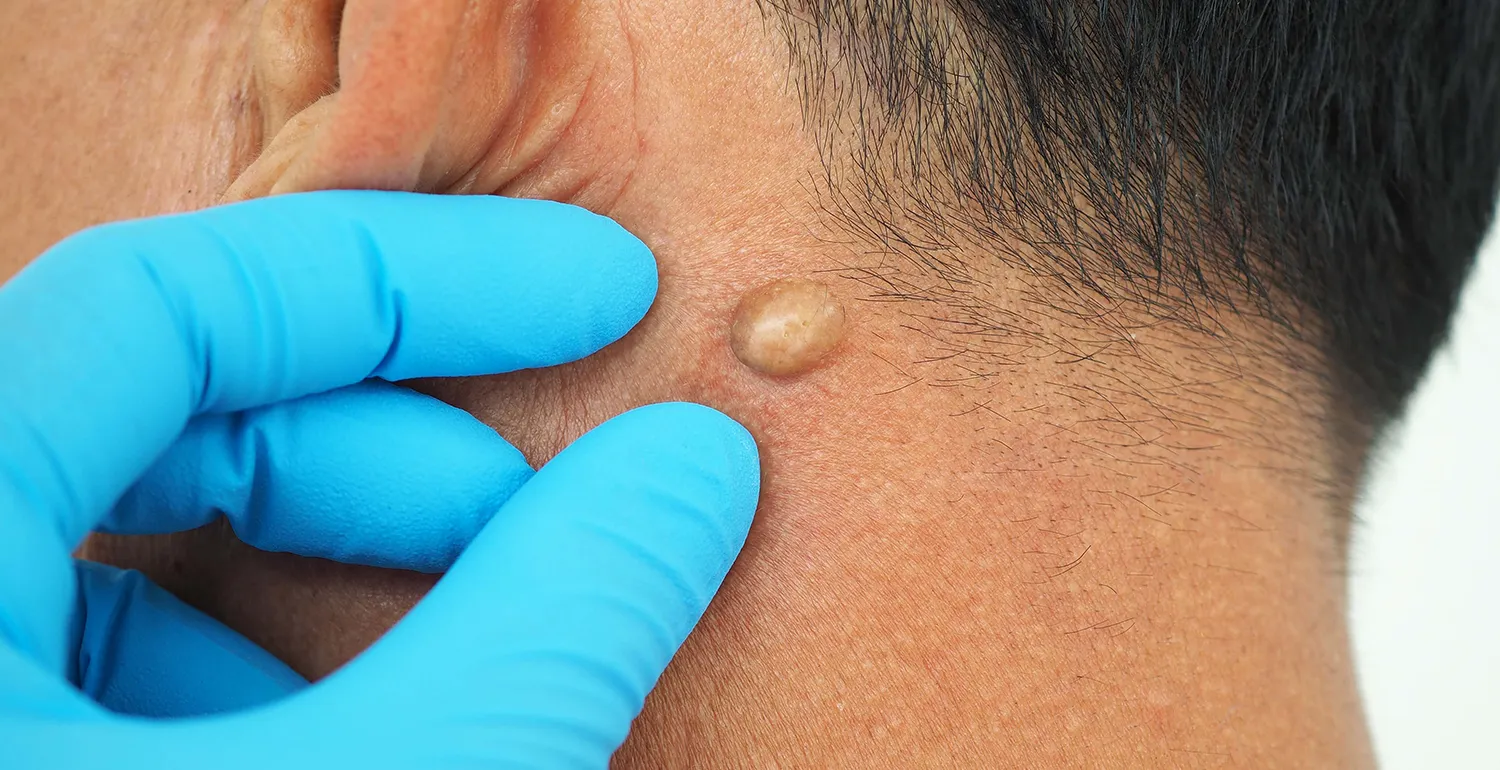
A sebaceous cyst typically appears as a round or oval, well-defined lump beneath the skin. Some cysts have a small central opening, known as a punctum, which may be visible on the skin's surface and look like a comedo (blackhead).
A lipoma usually appears as a smooth, rounded or oval lump beneath otherwise normal-looking skin. It does not typically have a central opening or cause visible changes to the skin above it.
Texture
Sebaceous cysts generally feel firm and may become tense or tender when inflamed. Their consistency is related to the keratin and other material contained within the cyst.
Lipomas tend to feel soft or rubbery because they are composed of fatty tissue. They can often be compressed slightly when pressure is applied.
Movement
A sebaceous cyst is connected more closely to the overlying skin, particularly when a punctum is present. As a result, the skin may move together with the cyst when it is examined.
A lipoma typically sits deeper beneath the skin and is not attached to the surface. It can therefore usually be moved from side to side beneath the skin when gentle pressure is applied.
Pain, Tenderness and Infection
Sebaceous cysts may become painful or tender when the cyst wall ruptures and releases keratin into the surrounding tissue, triggering an inflammatory response. Pain can also develop if the cyst becomes infected.
Lipomas are typically painless because they consist of mature fat cells growing within a localised mass, which does not affect the skin's surface, and tends not to trigger inflammation in the surrounding tissue. However, a larger or deeper lipoma may cause discomfort if it presses against nearby nerves or other structures.
Location
Sebaceous cysts commonly develop on areas such as the face, neck, scalp, chest and back, where hair follicles and their associated oil-producing glands are abundant.
Lipomas arise from fatty tissue rather than structures within the skin. They can therefore develop in many areas where subcutaneous fat is present, including the shoulders, arms, thighs, back and trunk.
When Does a Skin Lump Become a Cause for Concern?
Sebaceous cysts and lipomas are generally benign. However, certain changes warrant further assessment.
A lump should be examined by a doctor if it:
- Grows rapidly or continues to increase in size
- Feels unusually hard or fixed to surrounding tissue
- Develops persistent or unexplained pain
- Changes noticeably in shape or appearance
- Is located deep beneath the skin rather than immediately under the surface
- Returns after previous treatment or removal attempts
These features do not necessarily mean that a lump is harmful, but they may require further investigation to establish its cause and rule out other skin or soft-tissue growths. A dermatologist may be able to recommend cyst removal or subsequent treatment procedures.
Seeking Early Skin Assessment with Dr Koh Hong Yi
An early assessment can help clarify the nature of a skin lump before it becomes more difficult to manage. This allows any necessary care to be planned based on the specific type, location and characteristics of the lump, rather than waiting for it to progress or cause further problems.
At TSN Dermatology, Senior Consultant Dermatologist Dr Koh Hong Yi provides comprehensive assessment and management of sebaceous cysts, lipomas and other skin growths. He takes a personalised, evidence-based approach to care, assessing each patient's condition carefully before recommending treatment suited to their individual needs.
Contact us today to arrange a consultation with Dr Koh and discuss the appropriate next steps for your skin treatment.
Meet Our Doctor
MBBS, MRCP (UK), M.Med (Internal Medicine), FAMS (Dermatology)

Dr Koh Hong Yi has over 20 years of clinical experience spanning Singapore and the United Kingdom. He previously served at Singapore General Hospital and was involved in medical teaching at Duke-NUS Medical School. He believes in a personalised and thoughtful approach to care, taking the time to understand each patient’s concerns and recommend treatment tailored to their needs.
More About Dr Koh