
 +65 64766821
Get In Touch
+65 64766821Book An Appointment

How to Tell When Sebaceous Cyst Removal Is Needed
September 2026

Dr Koh Hong Yi
Senior Consultant Dermatologist
 MBBS (Singapore), MRCP (UK), MMed (Internal Medicine), FAMS (Dermatology)
A sebaceous cyst may be easy to live with when it is small and painless. However, changes to the cyst, increasing discomfort or concerns about how it looks may leave you wondering whether removal is the right choice for you.
Whatever your reason for considering sebaceous cyst removal, understanding the available options can help you make a more informed and confident decision about your care.
Do Sebaceous Cysts Always Need to Be Removed?
Sebaceous cysts do not always need to be removed. If a cyst is small, stable and not causing discomfort or other concerns, it may be reasonable to leave it untreated and monitor it for changes.
Some cysts can remain relatively unchanged for long periods without requiring active treatment. In these cases, monitoring allows you to keep track of the cyst while avoiding a procedure that may not currently be necessary. This does not prevent removal from being considered later if your circumstances or personal preferences change.
When Is Sebaceous Cyst Removal Recommended?
Sebaceous cyst removal may be medically recommended when the cyst is causing complications or developing concerning changes. Removal can also be considered simply because you would prefer the cyst to be gone, including for cosmetic or personal reasons. Some of the circumstances in which removal may be recommended or considered include:
Continued Growth or Increasing Size
Some cysts gradually enlarge as keratin continues to accumulate within them. Over time, a larger cyst may become more noticeable, place pressure on surrounding tissues or become more difficult to manage.
Removal may therefore be considered if the cyst shows continued growth, particularly before its size begins to cause additional concerns.
Recurrent Inflammation or Infection
A sebaceous cyst can become inflamed if its wall ruptures and releases keratin into the surrounding tissue. It may also develop a secondary bacterial infection, resulting in symptoms such as redness, swelling, warmth and tenderness. If this happens repeatedly, definitive removal may be appropriate.
Persistent Pain or Physical Discomfort
A sebaceous cyst may cause discomfort because of its size or the pressure it places on nearby tissue. Its location can also expose it to repeated friction from clothing, movement, shaving or other everyday activities.
When this discomfort becomes persistent or interferes with normal activities, removal can provide a more definitive way of addressing the source of the problem.
Rupture or Recurrent Discharge
If a cyst ruptures, its contents can escape into the surrounding tissue or discharge through an opening in the skin. Simply draining these contents does not necessarily remove the cyst wall, meaning the cyst may fill again over time.
For cysts that repeatedly rupture or discharge, complete removal of the cyst wall may therefore be considered to reduce the likelihood of recurrence.
Uncertainty About the Diagnosis
Sometimes, what appears to be a cyst may have suspicious traits or atypical features that prompt further investigation. If its diagnosis cannot be confidently established through clinical examination, your doctor may recommend removal so the tissue can be examined under a microscope to determine the nature of the lump and rule out other conditions.
Location and Cosmetic Concerns
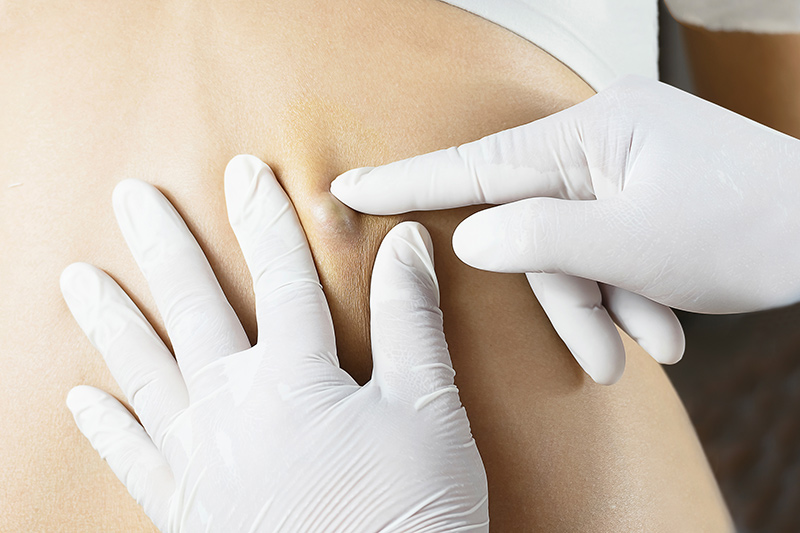
The location of a sebaceous cyst can influence the decision to remove it even when it is not causing a medical complication. A cyst on a visible area such as the face, scalp or neck may be cosmetically bothersome, while one in an area exposed to frequent contact or friction may simply be inconvenient. Cysts located on dependent areas such as the back, buttocks or back of the thighs run a risk of being compressed and eventually rupture. Hence, these cysts should be prophylactically removed before they cause a problem.
You may also prefer to have a cyst removed because its appearance or presence bothers you. These personal concerns can form part of the decision to pursue removal alongside any medical considerations.
How Are Sebaceous Cysts Removed?
Sebaceous cyst removal is typically performed as a minor surgical procedure under local anaesthesia. The process generally involves:
1. Preparing and numbing the area
The skin around the cyst is cleaned before local anaesthesia is administered to numb the treatment area and minimise discomfort during removal.
2. Accessing the cyst via a minimal incision technique
Once the area is numb, a small incision is made over or around the cyst to access it beneath the skin. This minimal incision technique helps to reduce the size of the wound and scar.
This is in contrast to conventional excisional techniques where the cyst is cut out together with surrounding normal or inflamed skin, resulting in a larger scar.
3. Removing the cyst and its wall
The cyst is carefully separated from the surrounding tissue and removed together with its wall or capsule. Removing the entire wall helps reduce the likelihood of the cyst forming again, whereas simply draining its contents can leave the cyst structure behind. The removed tissue will usually be sent to the lab for histological analysis to confirm it is benign (non-cancerous).
4. Closing and dressing the wound
The incision will usually be closed with stitches. Fine sutures are preferred to reduce the risk of prominent scars. While some doctors or situations may require the wound to be left to heal by itself (healing by secondary intention), it is our preference to close the wound with stitches wherever possible, as this expedites the healing process, reduces pain and healing time, and usually results in a smaller scar.
5. Recovering after removal
You will be given instructions for keeping the wound clean and protected while it heals. Mild soreness, swelling or bruising may occur initially, and stitches may need to be removed during a follow-up visit. Your doctor will also advise when you can resume your usual activities.
Deciding Whether Sebaceous Cyst Removal Is Right for You
Sebaceous cyst removal is not a decision that has to be based on symptoms alone. While growth, recurrent inflammation or discomfort may provide a medical reason for removal, your own preference can be equally relevant to whether you choose to have it treated. Regardless of your reason for considering cyst removal, a consultation with a specialist can help you explore the various factors and decide on a course of action.
At TSN Dermatology, Senior Consultant Dermatologist Dr Koh Hong Yi provides personalised assessment and treatment for sebaceous cysts and other skin growths. With more than 20 years of experience in medical and surgical dermatology, he considers both the clinical features of the cyst and the concerns of each patient when advising on management and removal.
Get in touch with us today to discuss whether sebaceous cyst removal is right for you.
Frequently Asked Questions About Sebaceous Cyst Removal
Can a sebaceous cyst come back after removal?
A sebaceous cyst can recur if part of its wall or capsule remains beneath the skin, as this can allow the cyst to form again. Complete surgical removal of the cyst and its wall helps reduce the likelihood of the same cyst recurring, although a new cyst can still develop separately in the same area.
Will sebaceous cyst removal leave a scar?
Sebaceous cyst removal involves making an incision in the skin, so some degree of scarring is expected. Dr Koh prefers to use the minimal incision technique wherever possible, as this usually gives rise to the smallest scar and fastest healing time. The eventual appearance of the scar can vary depending on the cyst's size and location, the surgical technique used, wound healing process and individual tendency to develop noticeable scars.
How long does it take to recover from sebaceous cyst removal?
Most people can resume normal activities of daily living immediately after surgery. Strenuous activities or activities that may cause stretching across the wound should be deferred for one to two weeks to allow the skin to heal properly with a smaller scar. Showering or washing one’s hair is not a problem, though soaking the wound in water (such as using a bath-tube or swimming) should be avoided until stitches are removed. Healing time and time to removal of stitches is usually between one to two weeks, but may be longer for larger, deeper or inflamed cysts.
Can an inflamed or infected sebaceous cyst be removed?
An actively inflamed or infected cyst can be more difficult to remove because the cyst wall may be harder to separate cleanly from the surrounding tissue. For this reason, cysts on the back or buttocks that have a higher chance of becoming inflamed should be prophylactically removed when they are not inflamed and smaller in size.
Removing an inflamed cyst can help to significantly reduce the pain and discomfort arising from the inflammation. Depending on its condition, your doctor may also recommend managing the inflammation or infection first before proceeding with definitive removal at a later stage.
Meet Our Dermatologist in Singapore
MBBS (Singapore), MRCP (UK), MMed (Internal Medicine), FAMS (Dermatology)

Dr Koh Hong Yi has over 20 years of clinical experience spanning Singapore and the United Kingdom. He previously served at Singapore General Hospital and was involved in medical teaching at Duke-NUS Medical School. He believes in a personalised and thoughtful approach to care, taking the time to understand each patient’s concerns and recommend treatment tailored to their needs.
More About Dr Koh